
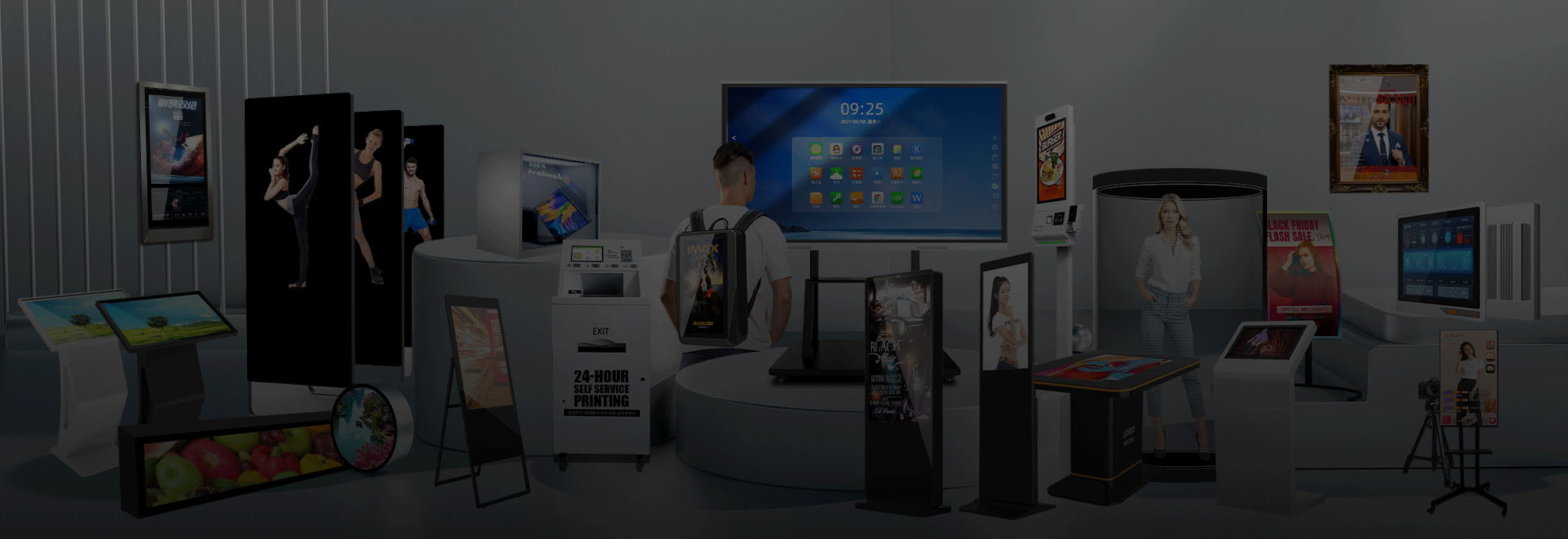

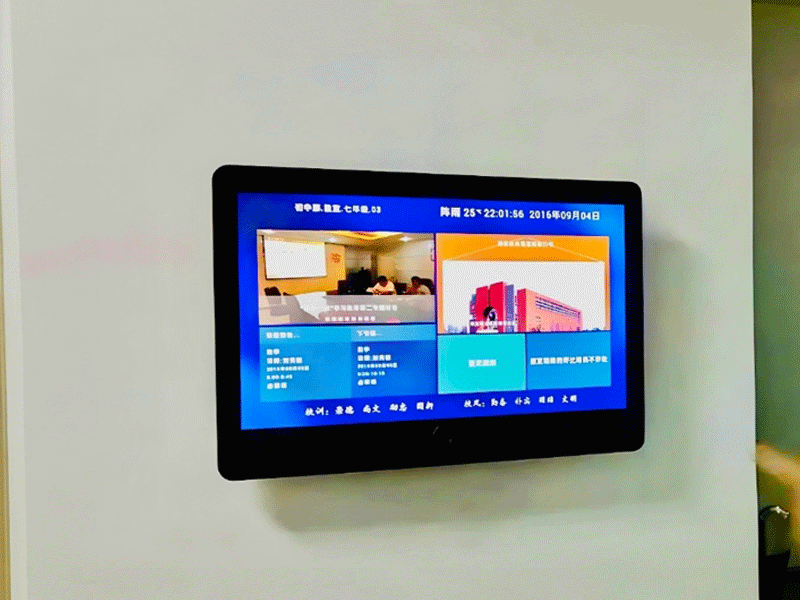

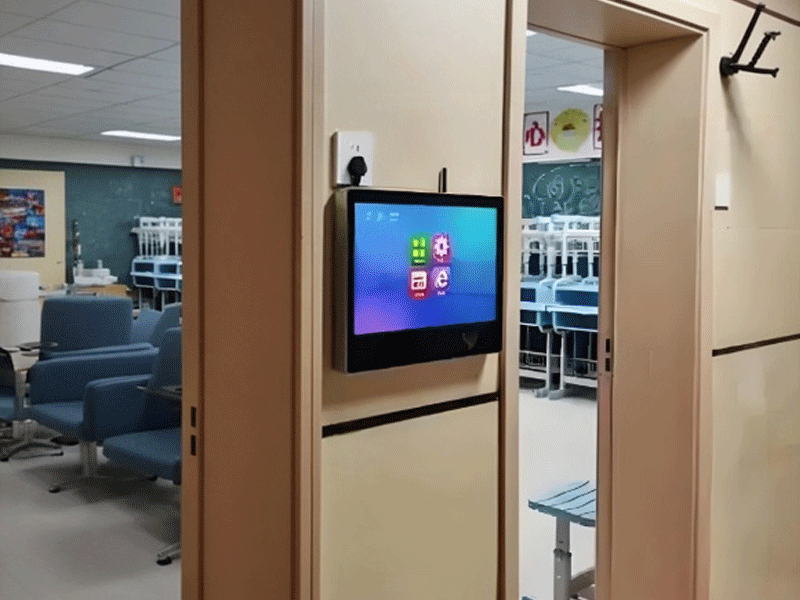



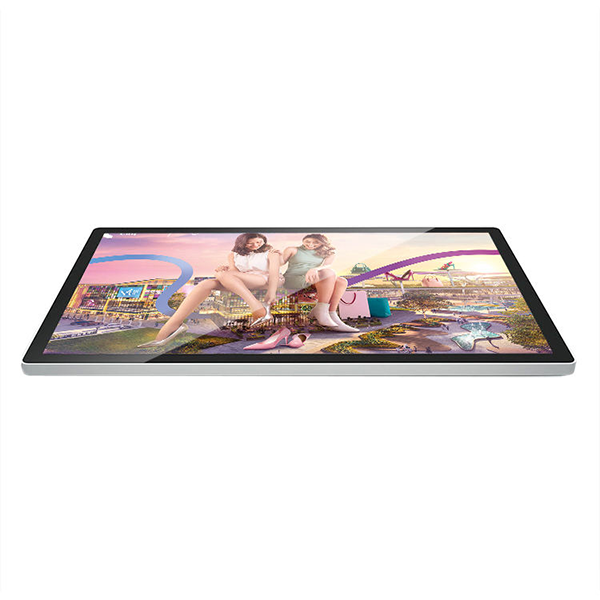
Manufacturers supply 21.5 inch 22 inch all-in-one machine network touch electronic class sign screen

electronic class sign-7
$350
Feature: video editing monitor;adobe rgb monitor;vesa monitor;tft monitor
Size: 10.1'';13.3'';15.6'';19'';21.5'';27'';32'';50'';55'';18.5'';24'';43'';49'';20cmx20cm;25cmx25cm
Operation System: Android;Windows
Screen: Touchscreen;Non-touch screen
Installation: Vertical;Horizontal;Wall-mounted;Portable
Type: Advertising Machine;Digital Signage Display;Teaching All-in-one Machine
Product Details
Product Details

A Comprehensive Exploration of Resolution in Electronic Classboards: 1920×1080 The Foundations of 1920×1080 Resolution: Defining Full HD in Educational Displays The 1920×1080 resolution, commonly termed "Full HD" (FHD) or "1080p," has become the gold standard for electronic classboards, balancing visual clarity, technical feasibility, and cost-effectiveness. This specification denotes 1,920 horizontal pixels and 1,080 vertical pixels, yielding a total of 2,073,600 pixels—over twice the pixel count of 720p (1280×720). For educational environments, this resolution isn’t just a technical spec; it’s a gateway to immersive content delivery, precise information display, and seamless interaction. Technical Breakdown: Pixels, PPI, and Display Dynamics Pixel Density (PPI) Calculation On a standard 21.5-inch classboard, 1920×1080 yields ~102 PPI (pixels per inch), surpassing the "retina" threshold (≈72 PPI for comfortable viewing at 50cm). Larger displays (e.g., 32 inches) maintain clarity with ~69 PPI, as educational viewing distances (1-3 meters) reduce the need for ultra-high PPI. Pixel Arrangement and Subpixel Technology Each pixel comprises three subpixels (red, green, blue), enabling 16.7 million color combinations. Advanced panel technologies like IPS (In-Plane Switching) enhance color accuracy and viewing angles, critical for 1920×1080 content viewed from diverse classroom positions.
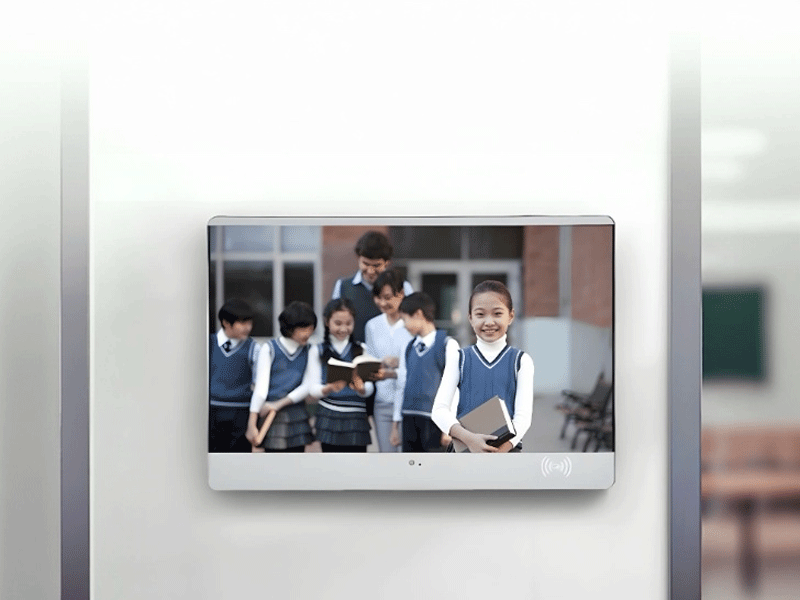

Educational Advantages: Where Clarity Meets Functionality

1.Precision in Text and Visuals

2.Small text (e.g., timetables, equations) remains legible without pixelation:

A 10-point font on 1920×1080 spans ~12 pixels, vs. 8 pixels on 1280×720, reducing eye strain for students.

Complex diagrams (e.g., chemistry molecular structures, historical maps) retain fine details:

A 1920×1080 display can show 40% more detail in a 10cm² area compared to 720p.

3.Optimized Multimedia Experience

4.1080p supports native playback of HD videos (e.g., educational documentaries, lab demonstration clips), eliminating upscaling artifacts.

content like 3D models or virtual labs benefit from smooth rendering:

A biology class using 1920×1080 can rotate a 3D cell model with 25% more surface texture detail than on a 720p display.

5.Multitasking and Content Versatility

6.Split-screen functionality (e.g., left: lecture slides, right: live Q&A) remains usable:

Each 960×1080 sub-zone on 1920×1080 matches the resolution of a standard laptop, ensuring content isn’t compressed.

Support for various aspect ratios (16:9 for videos, 4:3 for legacy documents) without cropping or black bars.

Technical Implementation: Enabling 1920×1080 in Classboards

Panel Technology Breakthroughs

ADS-Pro (Advanced Super Dimension Switch): Enhances color consistency across 1920×1080 pixels, critical for art classes or design projects.

IGZO (Indium Gallium Zinc Oxide): Reduces power consumption by 30% compared to traditional TFT panels, ideal for all-day operation.

Signal Processing and Calibration

Custom drivers optimize 1920×1080 signal transmission, minimizing latency (typically <15ms for touch response).

Pre-calibrated color profiles (e.g., sRGB 99%) ensure accurate representation of educational materials.

Anti-Glare and Viewing Angle Solutions

Micro-etching on 1920×1080 screens reduces ambient light reflection by 70%, maintaining clarity in bright classrooms.

178° horizontal/vertical viewing angles ensure consistent pixel quality from any seat.

Real-World Impact: Case Studies in Educational Settings

1.Boston Public Schools Initiative

After upgrading 500 classrooms to 1920×1080 classboards:

2.Student survey showed 82% reported "clearer text and images" vs. previous 720p displays.

Teachers noted a 35% reduction in time spent adjusting content for readability.

3.Higher Education Research Lab

A university physics department using 1920×1080 displays for virtual particle simulations:

4.Researchers could identify subatomic particle trajectories with 20% higher precision.

The resolution enabled 4×4 grid multi-display setups without compromising detail.

Future-Proofing with 1920×1080: Beyond Current Needs

While 4K exists, 1920×1080 remains relevant due to:

Compatibility with Legacy Content: 90% of educational videos and software are still produced in 1080p.

Network Efficiency: 1080p streams require 1/4 the bandwidth of 4K, critical for schools with limited IT infrastructure.

Long-Term Support: Most GPU manufacturers prioritize 1080p driver optimization, ensuring seamless operation for 5+ years.

Conclusion: 1920×1080 as the Educational Resolution Paradigm

The 1920×1080 resolution in electronic classboards is not merely a pixel count but a strategic choice that aligns technical capability with educational needs. By balancing clarity, cost, and compatibility, it enables educators to deliver content that is both visually engaging and information-dense. From crisp text in daily announcements to vibrant multimedia in STEM lessons, this resolution serves as the foundation for modern digital classrooms—proving that in education, the right level of detail can transform how knowledge is shared and absorbed. As technology evolves, 1920×1080 will continue to be the benchmark against which educational display standards are measured.


We use cookie to improve your online experience. By continuing to browse this website, you agree to our use of cookie.

Cookies

Please read our Terms and Conditions and this Policy before accessing or using our Services. If you cannot agree with this Policy or the Terms and Conditions, please do not access or use our Services. If you are located in a jurisdiction outside the European Economic Area, by using our Services, you accept the Terms and Conditions and accept our privacy practices described in this Policy.
We may modify this Policy at any time, without prior notice, and changes may apply to any Personal Information we already hold about you, as well as any new Personal Information collected after the Policy is modified. If we make changes, we will notify you by revising the date at the top of this Policy. We will provide you with advanced notice if we make any material changes to how we collect, use or disclose your Personal Information that impact your rights under this Policy. If you are located in a jurisdiction other than the European Economic Area, the United Kingdom or Switzerland (collectively “European Countries”), your continued access or use of our Services after receiving the notice of changes, constitutes your acknowledgement that you accept the updated Policy. In addition, we may provide you with real time disclosures or additional information about the Personal Information handling practices of specific parts of our Services. Such notices may supplement this Policy or provide you with additional choices about how we process your Personal Information.


Cookies

Cookies are small text files stored on your device when you access most Websites on the internet or open certain emails. Among other things, Cookies allow a Website to recognize your device and remember if you've been to the Website before. Examples of information collected by Cookies include your browser type and the address of the Website from which you arrived at our Website as well as IP address and clickstream behavior (that is the pages you view and the links you click).We use the term cookie to refer to Cookies and technologies that perform a similar function to Cookies (e.g., tags, pixels, web beacons, etc.). Cookies can be read by the originating Website on each subsequent visit and by any other Website that recognizes the cookie. The Website uses Cookies in order to make the Website easier to use, to support a better user experience, including the provision of information and functionality to you, as well as to provide us with information about how the Website is used so that we can make sure it is as up to date, relevant, and error free as we can. Cookies on the Website We use Cookies to personalize your experience when you visit the Site, uniquely identify your computer for security purposes, and enable us and our third-party service providers to serve ads on our behalf across the internet.

We classify Cookies in the following categories:
 ●  Strictly Necessary Cookies
 ●  Performance Cookies
 ●  Functional Cookies
 ●  Targeting Cookies


Cookie List
A cookie is a small piece of data (text file) that a website – when visited by a user – asks your browser to store on your device in order to remember information about you, such as your language preference or login information. Those cookies are set by us and called first-party cookies. We also use third-party cookies – which are cookies from a domain different than the domain of the website you are visiting – for our advertising and marketing efforts. More specifically, we use cookies and other tracking technologies for the following purposes:

Strictly Necessary Cookies
These cookies are necessary for the website to function and cannot be switched off in our systems. They are usually only set in response to actions made by you which amount to a request for services, such as setting your privacy preferences, logging in or filling in forms. You can set your browser to block or alert you about these cookies, but some parts of the site will not then work. These cookies do not store any personally identifiable information.

Functional Cookies
These cookies enable the website to provide enhanced functionality and personalisation. They may be set by us or by third party providers whose services we have added to our pages. If you do not allow these cookies then some or all of these services may not function properly.

Performance Cookies
These cookies allow us to count visits and traffic sources so we can measure and improve the performance of our site. They help us to know which pages are the most and least popular and see how visitors move around the site. All information these cookies collect is aggregated and therefore anonymous. If you do not allow these cookies we will not know when you have visited our site, and will not be able to monitor its performance.

Targeting Cookies
These cookies may be set through our site by our advertising partners. They may be used by those companies to build a profile of your interests and show you relevant adverts on other sites. They do not store directly personal information, but are based on uniquely identifying your browser and internet device. If you do not allow these cookies, you will experience less targeted advertising.

How To Turn Off Cookies
You can choose to restrict or block Cookies through your browser settings at any time. Please note that certain Cookies may be set as soon as you visit the Website, but you can remove them using your browser settings. However, please be aware that restricting or blocking Cookies set on the Website may impact the functionality or performance of the Website or prevent you from using certain services provided through the Website. It will also affect our ability to update the Website to cater for user preferences and improve performance. Cookies within Mobile Applications

We only use Strictly Necessary Cookies on our mobile applications. These Cookies are critical to the functionality of our applications, so if you block or delete these Cookies you may not be able to use the application. These Cookies are not shared with any other application on your mobile device. We never use the Cookies from the mobile application to store personal information about you.

If you have questions or concerns regarding any information in this Privacy Policy, please contact us by email at . You can also contact us via our customer service at our Site.