


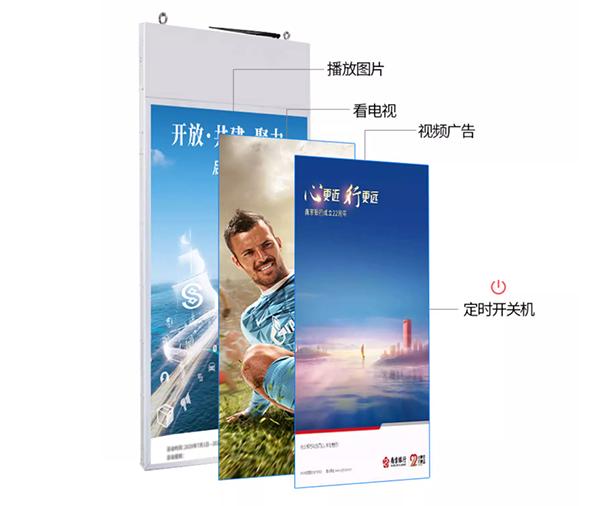


43 Inch transparent lcd thin video display player double digital signage hanging advertising machine screen

hanging screen-10
$350
Feature: monitor for macbook air;120hz gaming monitor;mac compatible monitors;mac compatible monitors
Size: 10.1'';13.3'';15.6'';19'';21.5'';27'';32'';50'';18.5'';24'';43'';49'';20cmx20cm;25cmx25cm
Operation System: Android;Windows
Screen: Touchscreen;Non-touch screen
Installation: Hanging
Type: Advertising Machine;Digital Signage Display
Product Details
Product Details

Resolution of Suspended Advertising Displays: A Comprehensive Guide Introduction Suspended advertising displays, commonly known as hanging or hanging advertising machine, are widely used in public spaces such as shopping malls, airports, and exhibition halls to deliver dynamic visual content. One of the most critical factors affecting their performance is resolution, which determines image clarity, detail, and overall visual impact. This article explores the concept of resolution in suspended advertising displays, its importance, common standards, and factors influencing selection. 1. Understanding Resolution in Suspended Advertising Displays Resolution refers to the number of pixels (individual dots of color) that compose an image on a screen. It is typically expressed as width × height (e.g., 1920×1080). Higher resolution means more pixels, resulting in sharper and more detailed images. Key Resolution Metrics:Pixel Density (PPI - Pixels Per Inch): Measures how densely pixels are packed on a screen. Higher PPI leads to finer details. Aspect Ratio: The proportional relationship between width and height (e.g., 16:9 for Full HD, 4:3 for older displays). Native Resolution:The optimal resolution a display is designed for, ensuring the best image quality.
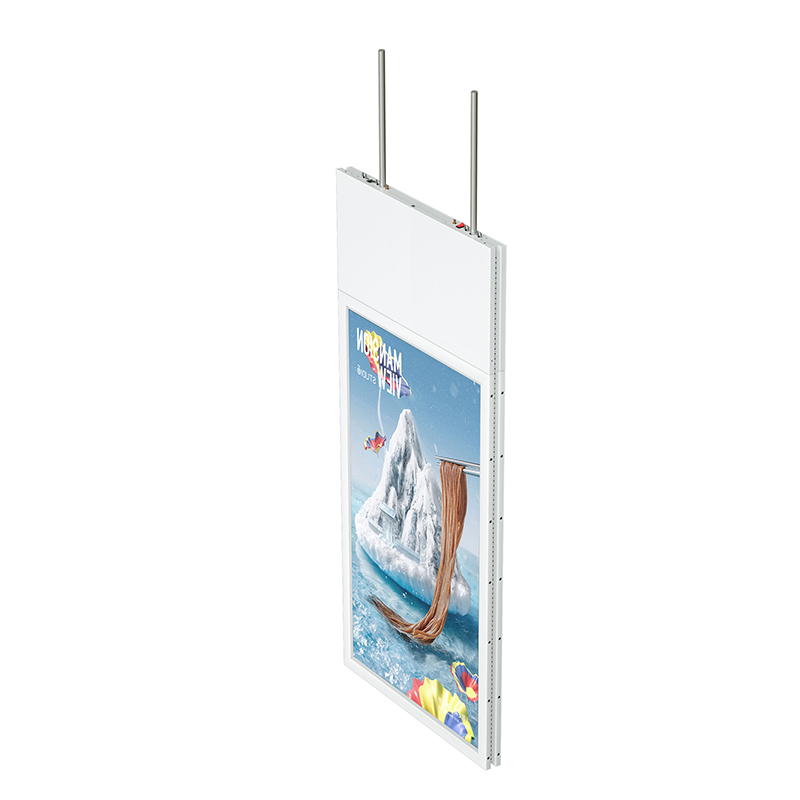
2. Common Resolution Standards for Suspended Advertising Displays

Suspended advertising displays come in various resolutions depending on their size, viewing distance, and application. Below are the most common standards:

a. HD (High Definition) – 1280×720 (720p)

- Suitable for smaller screens or environments where viewers are at a moderate distance.

- Lower cost but may lack sharpness for close-up viewing.

b. Full HD (FHD) – 1920×1080 (1080p)

- The most widely used resolution for 

- Balances clarity an hanging advertising machine a ffordability, ideal for medium-sized displays in retail and lobbies.

c. 4K Ultra HD (UHD) – 3840×2160

- Four times the pixels of Full HD, offering exceptional detail.

- Best for large screens or high-end venues where viewers are close (e.g., luxury stores, trade shows).

d. 8K Ultra HD – 7680×4320

- Cutting-edge resolution with ultra-fine details.

- Currently less common due to high costs but may become standard in premium installations.


3. Importance of Choosing the Right Resolution

Selecting the appropriate resolution is crucial for maximizing the effectiveness of suspended advertising displays. Key considerations include:

a. Viewing Distance

Close Proximity (1-3 meters): Requires higher resolutions (4K or 8K) to prevent pixelation.

Medium Distance (3-10 meters):Full HD is usually sufficient.

Long Distance (10+ meters): Even HD may appear acceptable due to reduced pixel visibility.

b. Content Type

Static Images/Text: Lower resolutions may suffice.

Videos/Animations:Higher resolutions ensure smooth playback and clarity.

c. Display Size

- Larger screens need higher resolutions to maintain image quality. A 4K display at 55 inches will look sharper than the same resolution on an 80-inch screen.

d. Budget Constraints

- Higher resolutions (4K/8K) come with increased costs for both hardware and content production.

4. Factors Affecting Perceived Resolution

Beyond pixel count, several factors influence how resolution is perceived:

a. Screen Technology

LCD/LED: Common, with good color accuracy but limited contrast.

OLED:Superior contrast and vibrancy, enhancing perceived sharpness.

b. Brightness and Contrast**

High brightness (measured in nits) ensures visibility in well-lit areas, while contrast ratio affects depth and detail.

c. Content Optimization

Poorly scaled or low-quality content can degrade perceived resolution, even on high-res displays.

5. Future Trends in Suspended Advertising Display Resolution**

Adoption of 8K:** As prices drop, 8K may become viable for high-traffic advertising.

AI Upscaling:** Machine learning can enhance lower-resolution content for higher-res screens.

Flexible/Transparent Displays Emerging technologies may introduce new resolution standards.

Conclusion

The resolution of a suspended advertising display significantly impacts its effectiveness in capturing audience attention. While Full HD remains the standard, 4K is becoming more prevalent for premium installations. Businesses must consider viewing distance, content type, and budget when selecting the right resolution. As technology advances, higher resolutions and smarter display solutions will continue to shape the future of digital advertising. 

By understanding these factors, advertisers can ensure their  hanging advertising machine delivers the best possible visual experience.


We use cookie to improve your online experience. By continuing to browse this website, you agree to our use of cookie.

Cookies

Please read our Terms and Conditions and this Policy before accessing or using our Services. If you cannot agree with this Policy or the Terms and Conditions, please do not access or use our Services. If you are located in a jurisdiction outside the European Economic Area, by using our Services, you accept the Terms and Conditions and accept our privacy practices described in this Policy.
We may modify this Policy at any time, without prior notice, and changes may apply to any Personal Information we already hold about you, as well as any new Personal Information collected after the Policy is modified. If we make changes, we will notify you by revising the date at the top of this Policy. We will provide you with advanced notice if we make any material changes to how we collect, use or disclose your Personal Information that impact your rights under this Policy. If you are located in a jurisdiction other than the European Economic Area, the United Kingdom or Switzerland (collectively “European Countries”), your continued access or use of our Services after receiving the notice of changes, constitutes your acknowledgement that you accept the updated Policy. In addition, we may provide you with real time disclosures or additional information about the Personal Information handling practices of specific parts of our Services. Such notices may supplement this Policy or provide you with additional choices about how we process your Personal Information.


Cookies

Cookies are small text files stored on your device when you access most Websites on the internet or open certain emails. Among other things, Cookies allow a Website to recognize your device and remember if you've been to the Website before. Examples of information collected by Cookies include your browser type and the address of the Website from which you arrived at our Website as well as IP address and clickstream behavior (that is the pages you view and the links you click).We use the term cookie to refer to Cookies and technologies that perform a similar function to Cookies (e.g., tags, pixels, web beacons, etc.). Cookies can be read by the originating Website on each subsequent visit and by any other Website that recognizes the cookie. The Website uses Cookies in order to make the Website easier to use, to support a better user experience, including the provision of information and functionality to you, as well as to provide us with information about how the Website is used so that we can make sure it is as up to date, relevant, and error free as we can. Cookies on the Website We use Cookies to personalize your experience when you visit the Site, uniquely identify your computer for security purposes, and enable us and our third-party service providers to serve ads on our behalf across the internet.

We classify Cookies in the following categories:
 ●  Strictly Necessary Cookies
 ●  Performance Cookies
 ●  Functional Cookies
 ●  Targeting Cookies


Cookie List
A cookie is a small piece of data (text file) that a website – when visited by a user – asks your browser to store on your device in order to remember information about you, such as your language preference or login information. Those cookies are set by us and called first-party cookies. We also use third-party cookies – which are cookies from a domain different than the domain of the website you are visiting – for our advertising and marketing efforts. More specifically, we use cookies and other tracking technologies for the following purposes:

Strictly Necessary Cookies
These cookies are necessary for the website to function and cannot be switched off in our systems. They are usually only set in response to actions made by you which amount to a request for services, such as setting your privacy preferences, logging in or filling in forms. You can set your browser to block or alert you about these cookies, but some parts of the site will not then work. These cookies do not store any personally identifiable information.

Functional Cookies
These cookies enable the website to provide enhanced functionality and personalisation. They may be set by us or by third party providers whose services we have added to our pages. If you do not allow these cookies then some or all of these services may not function properly.

Performance Cookies
These cookies allow us to count visits and traffic sources so we can measure and improve the performance of our site. They help us to know which pages are the most and least popular and see how visitors move around the site. All information these cookies collect is aggregated and therefore anonymous. If you do not allow these cookies we will not know when you have visited our site, and will not be able to monitor its performance.

Targeting Cookies
These cookies may be set through our site by our advertising partners. They may be used by those companies to build a profile of your interests and show you relevant adverts on other sites. They do not store directly personal information, but are based on uniquely identifying your browser and internet device. If you do not allow these cookies, you will experience less targeted advertising.

How To Turn Off Cookies
You can choose to restrict or block Cookies through your browser settings at any time. Please note that certain Cookies may be set as soon as you visit the Website, but you can remove them using your browser settings. However, please be aware that restricting or blocking Cookies set on the Website may impact the functionality or performance of the Website or prevent you from using certain services provided through the Website. It will also affect our ability to update the Website to cater for user preferences and improve performance. Cookies within Mobile Applications

We only use Strictly Necessary Cookies on our mobile applications. These Cookies are critical to the functionality of our applications, so if you block or delete these Cookies you may not be able to use the application. These Cookies are not shared with any other application on your mobile device. We never use the Cookies from the mobile application to store personal information about you.

If you have questions or concerns regarding any information in this Privacy Policy, please contact us by email at . You can also contact us via our customer service at our Site.