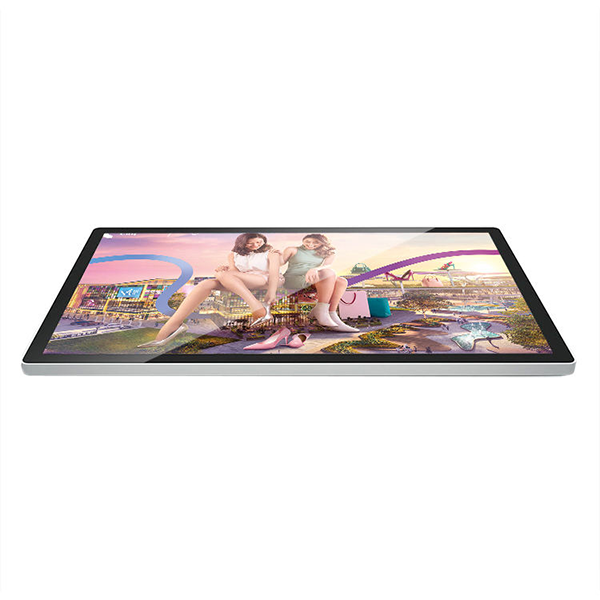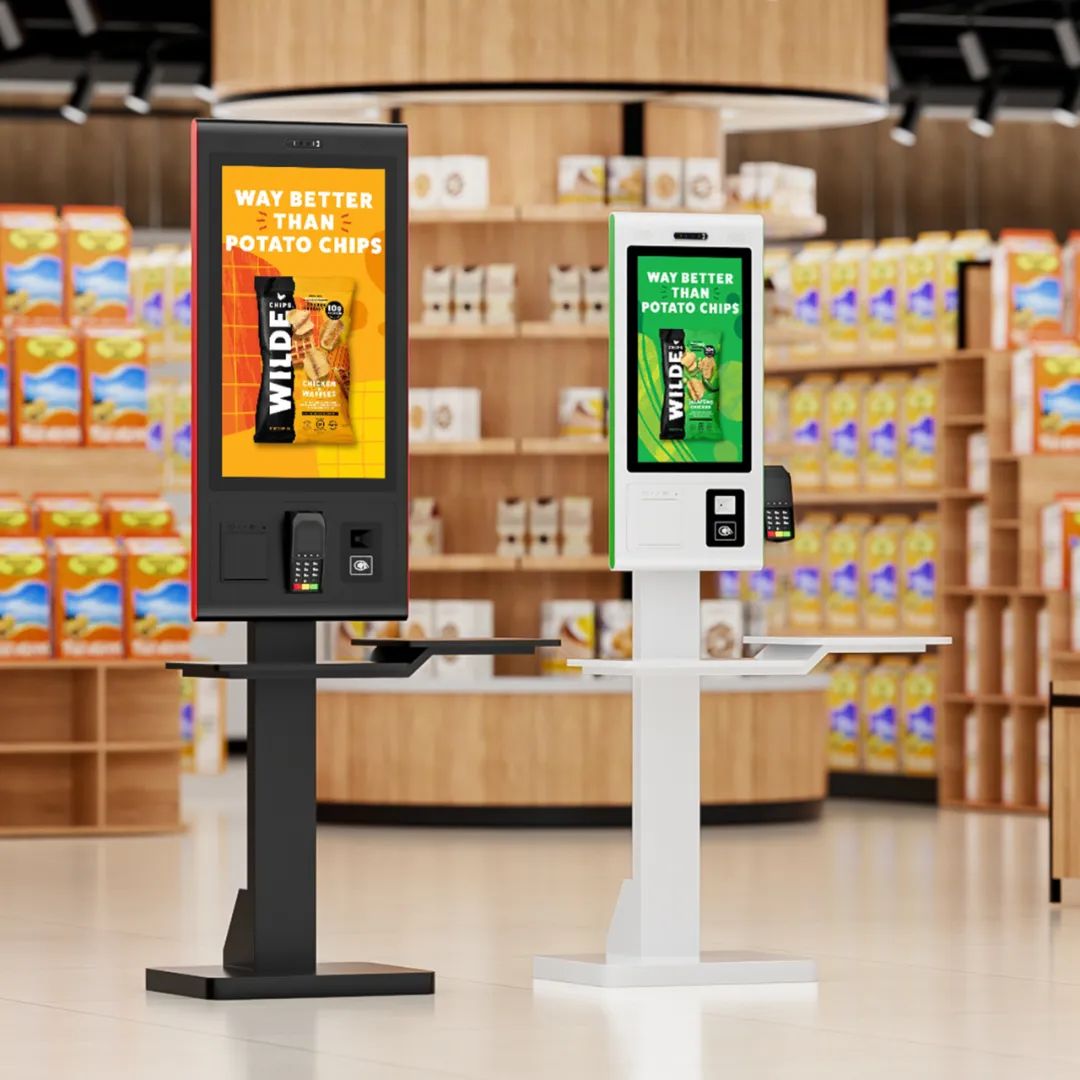

21,5 Zoll automatische interaktive Selbstbedienung Zahlung Kiosk Touchscreen restauran Bestellmaschine

Bestellbildschirm-5
$485
Merkmal: Benq interaktives Panel; 3d led plakate; google suche und anzeige anzeigen; video werbung display
Größe: 15.6'';19'';21.5'';27'';32''
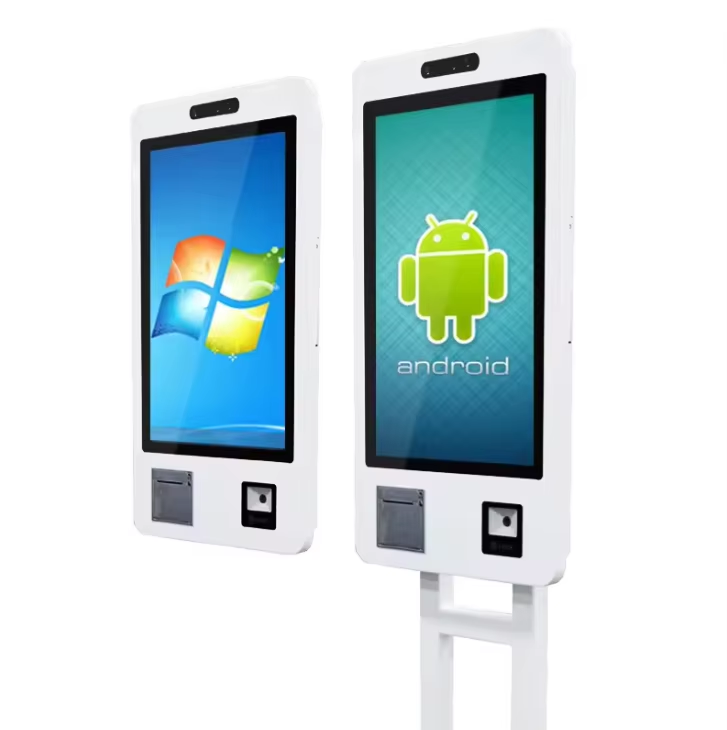
Betriebssystem: Android; Windows
Bildschirm: Touchscreen
Installation: Vertikal; Tragbar
Typ: Werbemaschine; Digital Signage Display; Selbstbedienungs-Touchscreen-Maschine
Product Details
Product Details

Integriertes Auftragsmanagement: Echtzeit-Synchronisierung mit Küche und POSIn der sich entwickelnden Landschaft des Food Service ist eine nahtlose Kommunikation zwischen Front-of-House und Back-of-House kein Luxus mehr - sie ist eine Notwendigkeit. Integrierte Auftragsverwaltungssysteme, insbesondere solche, die in Selbstbedienungs-Bestellautomaten eingebettet sind, haben die Arbeitsweise von Restaurants verändert, indem sie eine Echtzeit-Synchronisierung mit Küchen- und POS-Systemen (Point of Sale) bieten. Diese Konnektivität verbessert nicht nur die betriebliche Effizienz, sondern verbessert auch das gesamte Esserlebnis für die Kunden. Mit einem integrierten System wird jede über den Selbstbedienungsautomaten aufgegebene Bestellung sofort sowohl an das Küchenanzeigesystem (KDS) als auch an das POS-Terminal übertragen. Diese Echtzeitkommunikation eliminiert die Verzögerungen und Fehler, die typischerweise mit der manuellen Bestelleingabe verbunden sind. Köche und Küchenpersonal erhalten klare, strukturierte Informationen über die zuzubereitenden Gerichte, einschließlich Anpassungsanfragen, Portionsgrößen und spezifische Ernährungsnotizen. Dies gewährleistet eine höhere Bestellgenauigkeit und reduziert Lebensmittelverschwendung aufgrund falscher Zubereitungen.
20250423_1745390739882703.jpg

Auf der POS-Seite wird jede Transaktion automatisch aufgezeichnet, was den Zahlungsprozess vereinfacht und sicherstellt, dass alle Verkaufsdaten konsistent verfolgt werden. Diese direkte Verknüpfung hilft den Mitarbeitern, Diskrepanzen bei der Rechnungsstellung zu vermeiden und verbessert die Kassengeschwindigkeit. Darüber hinaus bietet es Restaurantleitern aktuelle Finanzdaten, die für die Bestandskontrolle, die Verkaufsanalyse und die Geschäftsprognose unerlässlich sind.

Einer der Hauptvorteile der Echtzeitsynchronisation ist die Erleichterung koordinierter Abläufe während der Hauptverkehrszeiten. Bestellungen von mehreren Selbstbedienungsterminals werden in Warteschlangen gestellt und effizient verwaltet, was eine ausgewogene Arbeitsbelastung in der Küche ermöglicht. Das System kann sogar Bestellungen auf der Grundlage der Vorbereitungszeit oder der Tischnummer priorisieren oder kategorisieren, so dass das Küchenpersonal seinen Arbeitsablauf effektiver planen kann.

Darüber hinaus unterstützen integrierte Systeme häufig den automatischen Druck von Quittungen oder Küchentickets. Diese Funktion ist besonders in traditionellen Küchen hilfreich, in denen noch gedruckte Bestellscheine verwendet werden. Sie macht zusätzliches Personal für die manuelle Transkription von Bestellungen überflüssig, was die Arbeitskosten senkt und die Zuverlässigkeit erhöht.

Ein weiterer Vorteil ist die Möglichkeit, sich mit Inventarsystemen zu synchronisieren. Wenn ein Artikel bestellt wird, kann das System automatisch und in Echtzeit Zutaten aus dem Lagerbestand abziehen. Dies hilft Managern, den Lagerbestand genau zu halten, Engpässe zu vermeiden und den Verbrauch von Zutaten genauer vorherzusagen. Es hilft auch, den Verkauf von Menüpunkten zu vermeiden, die nicht auf Lager sind.

Die Kundenzufriedenheit wird durch diese Integration erheblich gesteigert. Schnellere Auftragsabwicklung, minimierte Wartezeiten und weniger Fehler führen zu einem reibungsloseren und angenehmeren Esserlebnis. Durch die Automatisierung der Auftragsverfolgung und -synchronisierung können sich die Restaurantmitarbeiter außerdem mehr auf die Servicequalität und die Interaktion mit den Gästen konzentrieren.
Zusammenfassend lässt sich sagen, dass das integrierte Auftragsmanagement mit Echtzeit-Synchronisation mit Küchen- und POS-Systemen den Restaurantbetrieb revolutioniert. Es gewährleistet eine genaue Kommunikation, eine effiziente Auftragsabwicklung und eine reibungslose Koordinierung zwischen den Abteilungen. Für moderne Lebensmittelbetriebe ist diese Art von intelligenter Infrastruktur das Rückgrat eines zuverlässigen, skalierbaren und kundenorientierten Service.

We use cookie to improve your online experience. By continuing to browse this website, you agree to our use of cookie.

Cookies

Please read our Terms and Conditions and this Policy before accessing or using our Services. If you cannot agree with this Policy or the Terms and Conditions, please do not access or use our Services. If you are located in a jurisdiction outside the European Economic Area, by using our Services, you accept the Terms and Conditions and accept our privacy practices described in this Policy.
We may modify this Policy at any time, without prior notice, and changes may apply to any Personal Information we already hold about you, as well as any new Personal Information collected after the Policy is modified. If we make changes, we will notify you by revising the date at the top of this Policy. We will provide you with advanced notice if we make any material changes to how we collect, use or disclose your Personal Information that impact your rights under this Policy. If you are located in a jurisdiction other than the European Economic Area, the United Kingdom or Switzerland (collectively “European Countries”), your continued access or use of our Services after receiving the notice of changes, constitutes your acknowledgement that you accept the updated Policy. In addition, we may provide you with real time disclosures or additional information about the Personal Information handling practices of specific parts of our Services. Such notices may supplement this Policy or provide you with additional choices about how we process your Personal Information.


Cookies

Cookies are small text files stored on your device when you access most Websites on the internet or open certain emails. Among other things, Cookies allow a Website to recognize your device and remember if you've been to the Website before. Examples of information collected by Cookies include your browser type and the address of the Website from which you arrived at our Website as well as IP address and clickstream behavior (that is the pages you view and the links you click).We use the term cookie to refer to Cookies and technologies that perform a similar function to Cookies (e.g., tags, pixels, web beacons, etc.). Cookies can be read by the originating Website on each subsequent visit and by any other Website that recognizes the cookie. The Website uses Cookies in order to make the Website easier to use, to support a better user experience, including the provision of information and functionality to you, as well as to provide us with information about how the Website is used so that we can make sure it is as up to date, relevant, and error free as we can. Cookies on the Website We use Cookies to personalize your experience when you visit the Site, uniquely identify your computer for security purposes, and enable us and our third-party service providers to serve ads on our behalf across the internet.

We classify Cookies in the following categories:
 ●  Strictly Necessary Cookies
 ●  Performance Cookies
 ●  Functional Cookies
 ●  Targeting Cookies


Cookie List
A cookie is a small piece of data (text file) that a website – when visited by a user – asks your browser to store on your device in order to remember information about you, such as your language preference or login information. Those cookies are set by us and called first-party cookies. We also use third-party cookies – which are cookies from a domain different than the domain of the website you are visiting – for our advertising and marketing efforts. More specifically, we use cookies and other tracking technologies for the following purposes:

Strictly Necessary Cookies
These cookies are necessary for the website to function and cannot be switched off in our systems. They are usually only set in response to actions made by you which amount to a request for services, such as setting your privacy preferences, logging in or filling in forms. You can set your browser to block or alert you about these cookies, but some parts of the site will not then work. These cookies do not store any personally identifiable information.

Functional Cookies
These cookies enable the website to provide enhanced functionality and personalisation. They may be set by us or by third party providers whose services we have added to our pages. If you do not allow these cookies then some or all of these services may not function properly.

Performance Cookies
These cookies allow us to count visits and traffic sources so we can measure and improve the performance of our site. They help us to know which pages are the most and least popular and see how visitors move around the site. All information these cookies collect is aggregated and therefore anonymous. If you do not allow these cookies we will not know when you have visited our site, and will not be able to monitor its performance.

Targeting Cookies
These cookies may be set through our site by our advertising partners. They may be used by those companies to build a profile of your interests and show you relevant adverts on other sites. They do not store directly personal information, but are based on uniquely identifying your browser and internet device. If you do not allow these cookies, you will experience less targeted advertising.

How To Turn Off Cookies
You can choose to restrict or block Cookies through your browser settings at any time. Please note that certain Cookies may be set as soon as you visit the Website, but you can remove them using your browser settings. However, please be aware that restricting or blocking Cookies set on the Website may impact the functionality or performance of the Website or prevent you from using certain services provided through the Website. It will also affect our ability to update the Website to cater for user preferences and improve performance. Cookies within Mobile Applications

We only use Strictly Necessary Cookies on our mobile applications. These Cookies are critical to the functionality of our applications, so if you block or delete these Cookies you may not be able to use the application. These Cookies are not shared with any other application on your mobile device. We never use the Cookies from the mobile application to store personal information about you.

If you have questions or concerns regarding any information in this Privacy Policy, please contact us by email at . You can also contact us via our customer service at our Site.